NEW FOREST FRONTIERS
for: Jobs, Permanent Communities, A Stronger Nation
|

|
National-Forest Problems
|
|
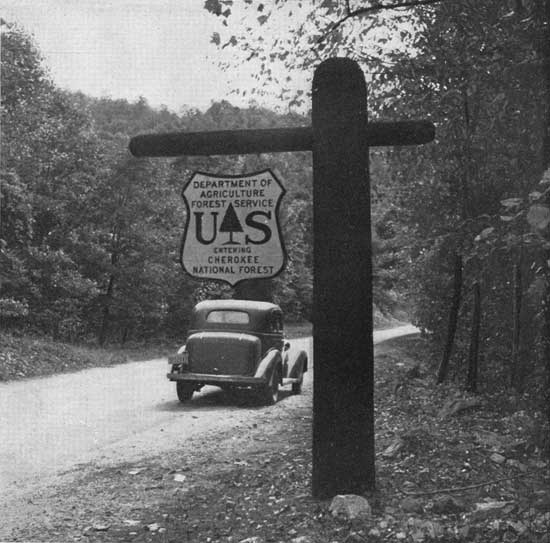
SO MUCH for the two-thirds of the Nation's
forest land in private ownership. That other one-third—mainly the
national forests—represents the first large-scale trial in the
United States of public ownership and administration of a great natural
resource. While it has been sufficiently successful to have received
general public approbation, great unfulfilled opportunities for public
service lie ahead. F-386384
|
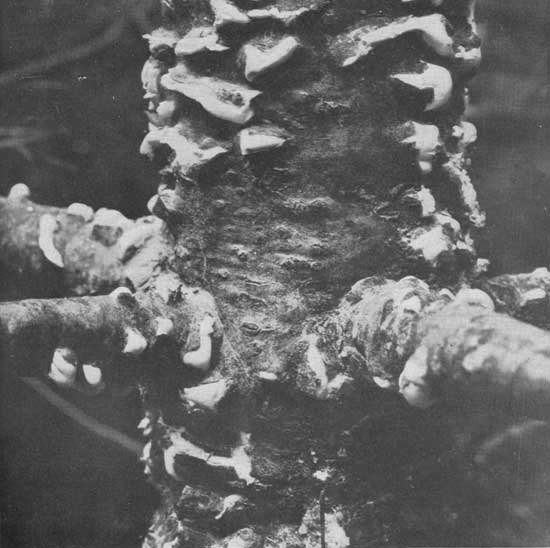
Blister rust canker on young white pine.
|
|
JUST as on private lands, we are in the national forests running a losing
race against time to stop the spread of white pine blister rust in
valuable and sugar pine stands. E AND PQ-484
|
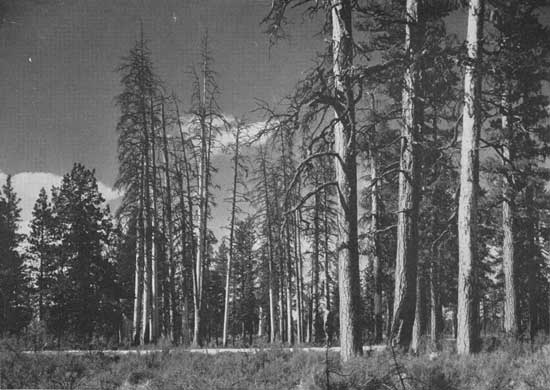
Potential lumber turned to snags by the western pine beetle.
|
|
WE ARE unprepared to combat the staggering losses caused by tree-killing insects. E AND PQ-8591
|
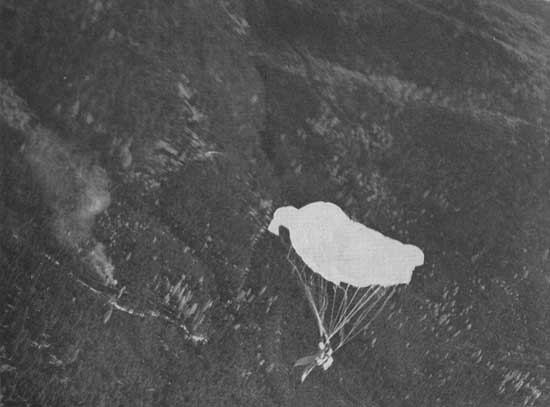
A fire fighter practicing descent by parachute to
control, before it spreads, a small fire in an inaccessible area.
|
|
ORGANIZED fire control has made great advances
since the establishment of the national forests in 1905. But
since then climate has taken an unfavorable swing, and human use of
forested areas has increased enormously. We still have an average of
about 13,000 fires a year on the national forests. F-387000
|
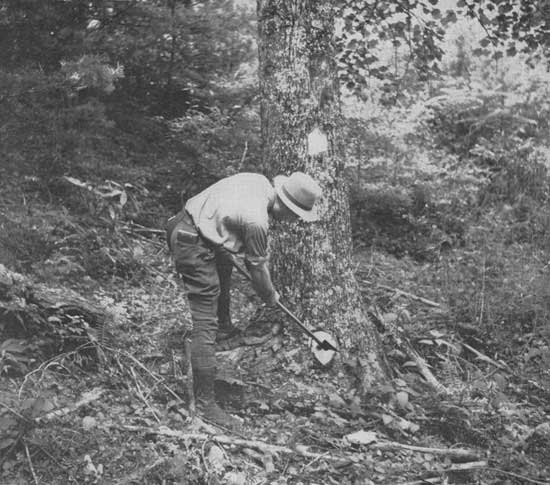
Marking selected tree for cutting on a sales area.
|
|
THE PRESENT work load of essential jobs on the national forests is much
too heavy for the available manpower, which means that work that ought
to be done and services that ought to be performed must be neglected. F-367152
|
|
|
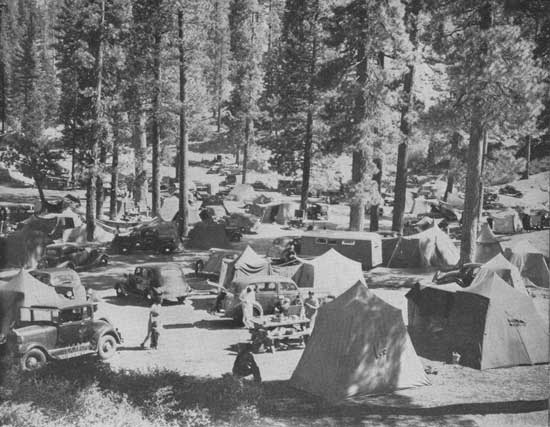
PUBLIC campgrounds on the national forests help provide low-cost
vacations for millions of people. Many more could be served, but
many of the facilities are already overcrowded. F-370908
|
|
|
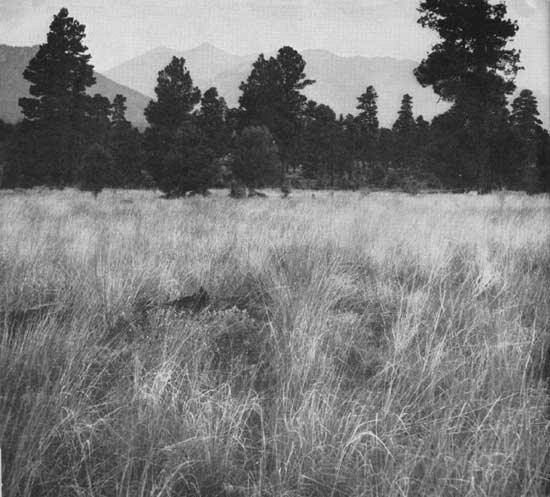
MUCH needs to be done to restore sore spots on forest ranges to full
productivity. This area was once badly denuded by overgrazing. USDI-4830
|
|
|
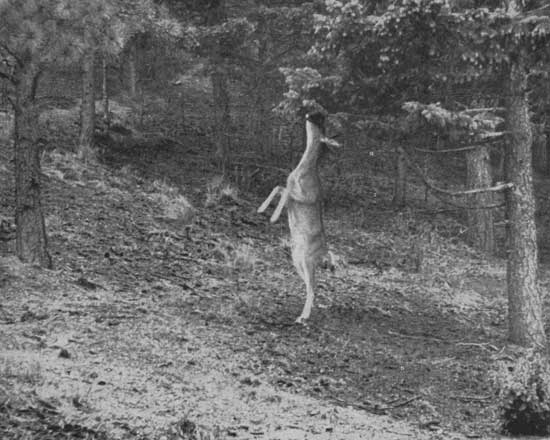
WILDLIFE management has lagged and, especially
in the West, excess numbers of big game have created serious local
problems. A shortage of food will cause a deer to browse as high on the
trees as it can reach, standing on its hind legs. Under such
circumstances survival of young trees is out of the question. F-395546
|
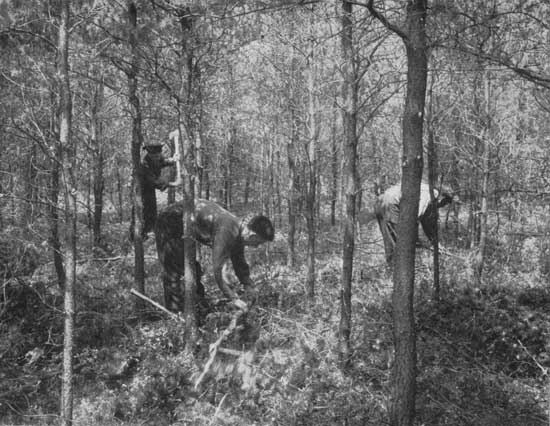
Thinning an overcrowded stand of young
trees—Hiawatha National Forest, Mich.
|
|
MUCH too small an area is under intensive
timber management. Timber management has been largely
confined to protection, planting, and silvicultural practices on sales
areas. Wholesale efforts to make land fully productive have not as yet
been attempted. F-384418
|
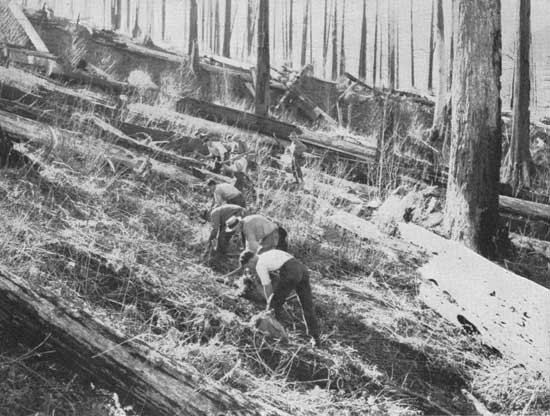
Planting is necessary when seed trees are burned.
|
|
AT THE present rate it will take about 30 years to complete the planting
of national-forest lands now requiring artificial restoration, and more
areas in this category are being added each year by fires and by land
purchase and exchange. F-349925
|
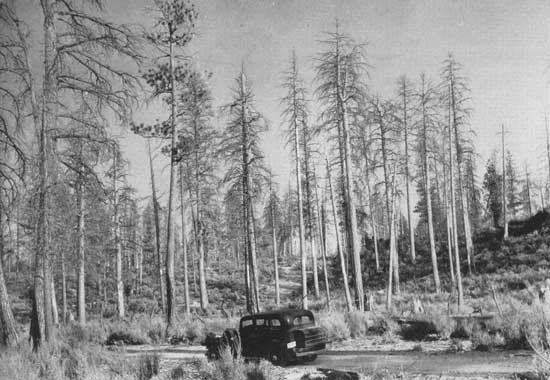
An isolated pocket of valuable timber killed by
insects. Such values are a total loss unless the trees can be salvaged
before deterioration sets in—usually a matter of only a few
weeks.
|
|
TIMBER values are lost following fire and
insect and disease attacks, and opportunities for improving stand
conditions are neglected because of inability of the Forest Service to
undertake logging operations in areas not adapted or attractive to
private enterprise. E AND PQ-8593
|
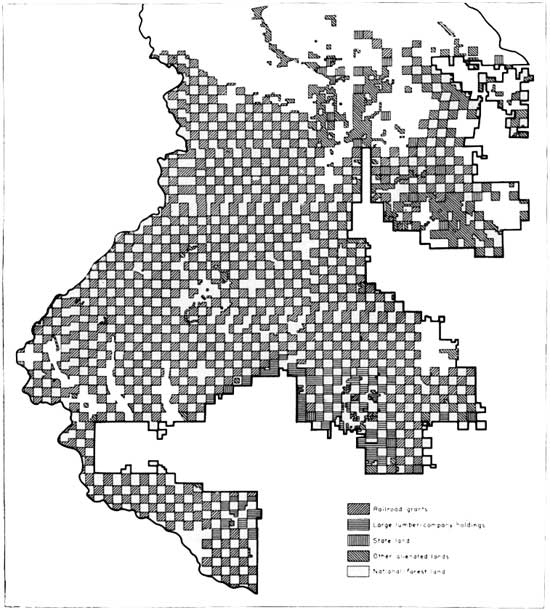
An extreme case of intermingled public and private
holdings—Wenatchee National Forest, Wash.
|
|
IN MANY areas wholly or partly within the
national forests, public and private lands are so divided and
intermingled that neither owner can do a satisfactory job of management
independently and thus insure permanent support for communities. In these situations it
is desirable but not now legally possible to pool public and private
resources under provisions which would protect both public and private
interests.
|
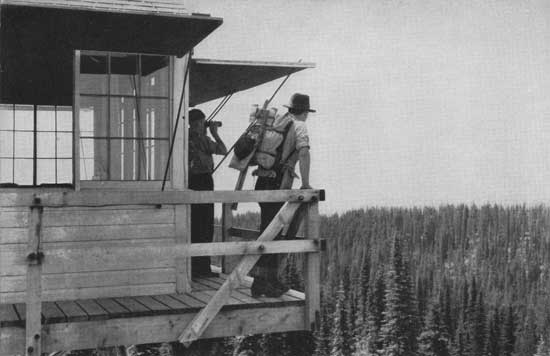
Forest guard standing by for directions to fire.
|
|
LOCAL short-term forest guards—the backbone
of the fire-protection organization—a fine type of
self-reliant skilled woodsman, are entitled to longer employment than
the average 3 months now available to them. They are needed on the
forests during the fire season, when the chances of getting an outside
job are best, and must then be laid off when outside work is scarce.
Meanwhile, forest-improvement work, for which these men are well
suited, remains undone. F-270820
|
misc-414/sec7.htm
Last Updated: 30-Jan-2009 |
|