A PRIMER OF FORESTRY
PART I—THE FOREST
|

|
CHAPTER I.
A PRIMER OF FORESTRY.
A PRIMER OF FORESTRY.
|
|
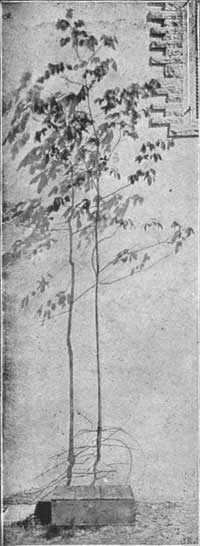
Fig. 1.—Roots, stem, and crown of a young Shellbark Hickory.
Milford, Pa.
|
THE LIFE OF A TREE.
The object of forestry is to discover and apply the principles
according to which forests are best managed. It is distinct from
arboriculture, which deals with individual trees. Forestry has to do
with single trees only as they stand together on some large area whose
principal crop is trees, and which therefore forms part of a forest.
(See frontispiece.) The forest is the most highly organized portion of
the vegetable world. It takes its importance less from the individual
trees which help to form it than from the qualities which belong to it
as a whole. Although it is composed of trees, the forest is far more
than a collection of trees standing in one place. It has a population of
animals and plants peculiar to itself, a soil largely of its own making,
and a climate different in many ways from that of the open country. Its
influence upon the streams alone makes farming possible in many regions,
and everywhere it tends to prevent floods and drought. It supplies fuel,
one of the first necessaries of life, and lumber, the raw material,
without which cities, railroads, and all the great achievements of
material progress would have been either long delayed or wholly
impossible. (See Pl. I.) The forest is as beautiful as it is useful. The
old fairy tales which spoke of it as a terrible place are wrong. No one
can really know the forest without feeling the gentle influence of one
of the kindliest and strongest parts of nature. From every point of view
it is one of the most helpful friends of man. Perhaps no other natural
agent has done so much for the human race and has been so recklessly
used and so little understood.
|
|
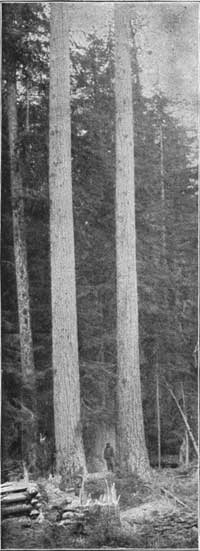
Fig. 4.—Trunks of two Red Firs. The figure of a man between them
gives an idea of their great size, which, however, is not unusual.
Olympic Forest Reserve, Washington.
|
THE PARTS OF A TREE.
In order rightly to understand the forest, something must first be
known about the units of which it is made up. A tree, then, is a woody
plant growing up from the ground usually with a single stem. (See fig.
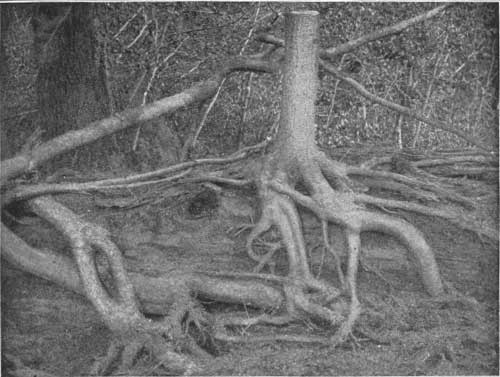
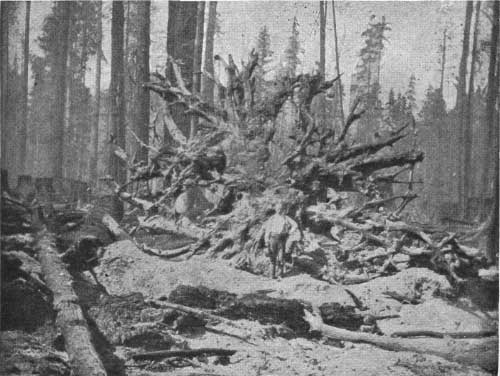
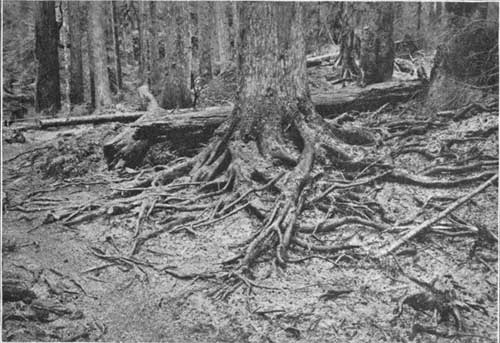
1.) It consists of three parts: First, the roots, which extend into the
ground to a depth of 3 or 4 feet, or still farther when the soil is not
too hard and they do not find moisture enough near the surface. (See
figs. 2, 3, and Pls. II, III.) They hold the tree in place, and take up
from the soil water and certain mineral substances which the tree needs
in its growth. Second, the trunk, stem, or bole, which supports the
crown and supplies it with mineral food and water from the roots. (See
fig. 4.) Third, the crown itself, with its net ork of branches, buds,
and leaves, in which the food taken up by the tree from the soil and air
is worked over and made ready to assist in the growth of the whole
plant. (See figs. 5-7 and Pl. IV.) The crown has more to do with the
life of the tree than its other parts, for the most important processes
in the reproduction of the tree and the digestion of its food take place
in the crown. For this reason, and because we can control its shape and
size more easily and directly than that of the roots or trunk, the crown
is of special interest to the forester. It is almost exclusively with
the crowns that he has to deal in tending a crop of trees and preparing
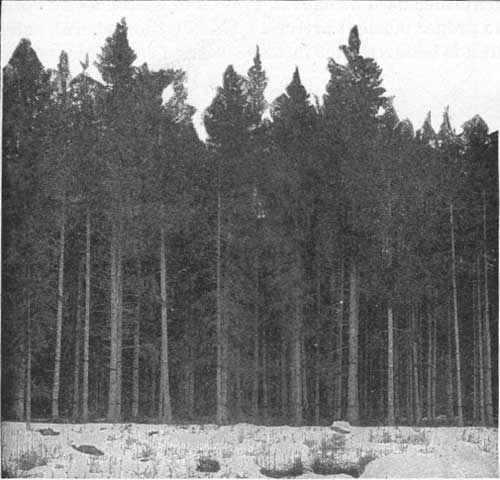
the way for the succeeding generation. As they stand together in the
forest, the crowns of the trees form a broken shelter, which is usually
spoken of as the leaf canopy, but which may better be called the cover.
(See fig. 8.)

|
|
Plate I. A FOREST IN WESTERN WASHINGTON ALONG A WAGON ROAD.
|
|
|
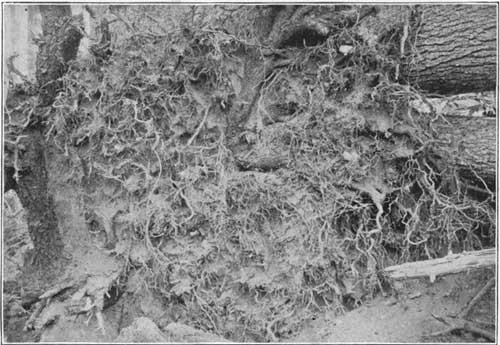
Fig. 2.—Roots of the Western Hemlock. This young tree started on a
fallen Red Fir; its roots spread under the moss and litter, and when
fire came they were exposed. Olympic Forest Reserve, Washington.
|
|
|
Fig. 3.—Upturned skeleton roots of a Red Fir. The small roots have
been burned away and the others cleared of soil by the fire. Olympic
Peninsula, Washington.
|
|
|
Plate II. UPTURNED ROOTS OF WESTERN HEMLOCK, SHOWING HOW THOROUGHLY THE
SMALL ROOTS PENETRATE THE SOIL. OLYMPIC PENINSULA, WASHINGTON.
|
|
|
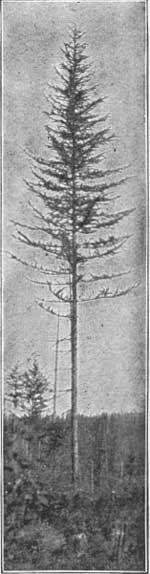
Fig. 5.—Crown and stem of a young Western Larch. Priest River
Forest Reserve, Idaho.
|
THE FOOD OF A TREE.
The materials upon which a tree feeds are derived from the soil and
the air. The minute root hairs which spring from the rootlets take up
water from the ground, and with it various substances which it holds in
solution. These are the earthy constituents of the tree, which reappear
in the form of ashes when any part of it is burned. The water which
contains these materials goes straight from the roots to the leaves, in
which a most important process in the feeding of the tree takes place.
This process is the assimilation or taking up and breaking up, by the
leaves, of carbonic acid gas from the air. It goes on only in the
presence of light and heat, and through the action of chlorophyll, a
substance from which the leaves and the young bark get their green
color.
Plants containing chlorophyll are the chief means by which mineral
materials are changed into food, so that nearly all plant and animal
life depends upon them. Plant cells which contain chlorophyll break up
the carbonic acid gas with which they come in contact, retain the
carbon, one of its elements, and send back the other, oxygen, into the
air. Then, still under the influence of the sunlight, they combine the
carbon with the oxygen and hydrogen of the water from the roots into new
chemical compounds, in which nitrogen and the earthy constituents
mentioned above are also present; that is to say, the food materials
which reach the tree through the roots and leaves are first digested in
the leaves somewhat as food is digested in the human body, and are then
sent to all living parts of the roots, stem, and crown, where they pass
through another process of digestion, and are then either used at once
in growth or stored away until the proper moment arrives. This is the
general rule, but it is believed that in some cases food taken up by the
roots can be used without first being digested in the leaves.
|
|
|
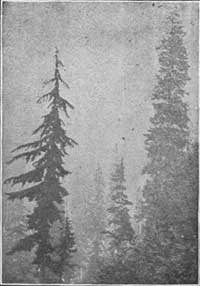
Fig. 6.—Crowns of the Black Hemlock (to the left) and Western
Cedar. Washington Forest Reserve.
|
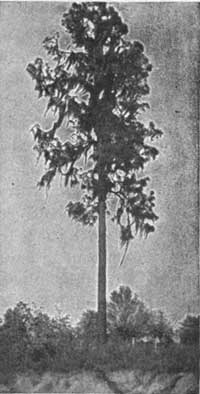
Fig. 7.—Stem and crown of a Longleaf Pine, the latter covered with
moss swaying in the wind.
|
|
|
Plate III. ROOTS OF WESTERN HEMLOCK. OLYMPIC
PENINSULA, WASHINGTON. A portion of the deep vegetable mold in
which this tree stands has been burned away and the roots are exposed.
|
|
|
Fig. 8.—The forest cover. Spruce in Bavaria, Germany.
|
|
|
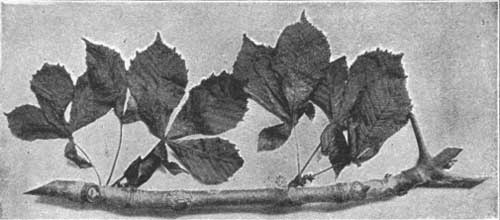
Fig. 9.—Yearly growth of a branch of Horse Chestnut. The hands of
wrinkles mark the divisions between the growths of four successive
years. The distance between these bands would never have been greater
than it was when the branch was cut.
|
THE COMPOSITION OF WOOD.
Wood is made up chiefly of carbon, oxygen, and hydrogen. When
perfectly dry, about half its weight is carbon, and half oxygen and
hydrogen, in almost the same proportion as in water. It contains also
about 1 part in 100, by weight, of earthy constituents, and nitrogen to
the same amount. When wood is burned, all these materials disappear into
the air except the earthy constituents. Now the nitrogen and water taken
up by the roots were originally in the air before they reached the
ground. It is true, therefore, that when wood is burned those parts of
it which came from the air go back into it in the form of gas, while
those which came from the soil remain behind in the form of ashes.
|
|
|
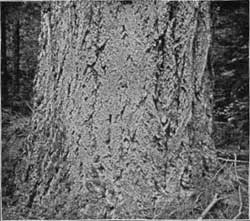
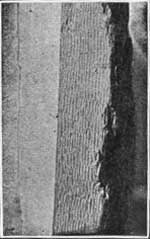
Fig. 10.—Bark of the Western Hemlock. Washington Forest
Reserve.
|
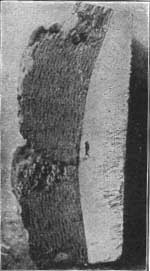
Fig. 11.—Wood and bark of the Western Yellow Pine. The cut is
perpendicular and the specimen stands as it did in the tree. The picture
shows the division of the bark into scales by the successive layers of
cork cambium. The true cambium is between wood and bark.
|

|
|
Plate IV. STEM AND CROWN OF A FOREST TREE IN BRITISH INDIA. The stem is
about three feet in diameter.
|
HOW THE TREE BREATHES.
Besides giving out oxygen in assimilation, trees also take in oxygen
from the air through their leaves, and through the minute openings in
the bark called lenticels, such as the oblong raised spots or marks on
the young branches of Birch and Cherry and many other trees. All plants,
like all animals, breathe; and plants, like animals, breathe in oxygen
and breathe out carbonic acid gas. This process of respiration or the
breathing of the tree goes on both day and night, but it is far less
active than assimilation, which takes place only in the light.
Consequently more carbonic acid gas is taken into the tree than is given
out, and the surplus carbon remains to be used in growing.
|
|
|
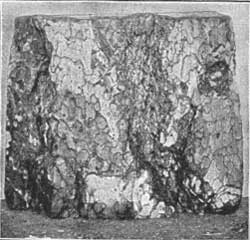
Fig. 12—Wood and bark of the Western Yellow Pine. The cut is a
cross section and would have been horizontal as the specimen stood in
the tree. Besides the division of the bark into scales this picture
shows two of the deep-cracks in the bark, at the bottom of which
lenticels are placed.
|
Fig. 13—Bark of the Western Yellow Pine. Outer surface, showing
the scales made by the successive layers of cork cambium.
|
TRANSPIRATION.
The leaves give out not only the oxygen derived from the
decomposition of carbonic acid gas taken from the air and carbonic acid
gas produced in breathing, but also great quantities of water vapor. The
amount of water taken up by the roots is very much larger than is
required to be combined with carbon and the earthy constituents in the
leaves. In order that fresh supplies of earthy constituents in solution
may reach the leaves rapidly, the water already in them must be got out
of the way. This is effected by transpiration, which is the evaporation
of water from all parts of the tree above ground, but principally from
the leaves. Even where the bark is very thick, as on the trunks of old
Oaks and Chestnuts, transpiration goes on through the lenticels in the
bottoms of the deep cracks. It sometimes happens, especially in spring
before the leaves come out, that transpiration can not get rid of the
water from the roots as fast as it rises, and that it falls in drops
from the buds, or later on even from the leaves themselves.
|
|
|
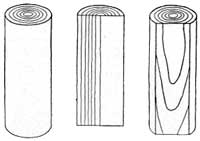
Fig. 14.—By comparing this diagram with Pls. VII—IX and fig.
16, the place of each cut in the tree will be made clear.
|
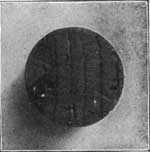
Fig. 15.—Top of a common cork, slightly moistened to bring out the
lines of annual growth, which are rather unusually plain in this
specimen.
|
|
|
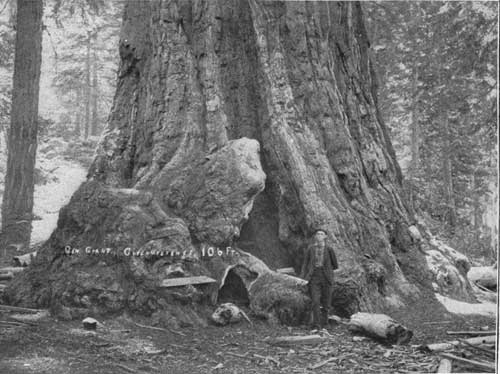
Plate V. BARK OF ONE OF THE BIG TREES OF CALIFORNIA. GENERAL GRANT
NATIONAL PARK.
|
|
|
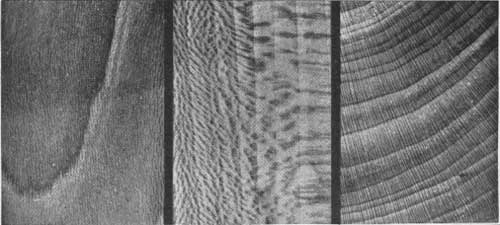
Fig. 16.—Wood of the Eastern Sycamore or Button-ball tree.
|
|
|
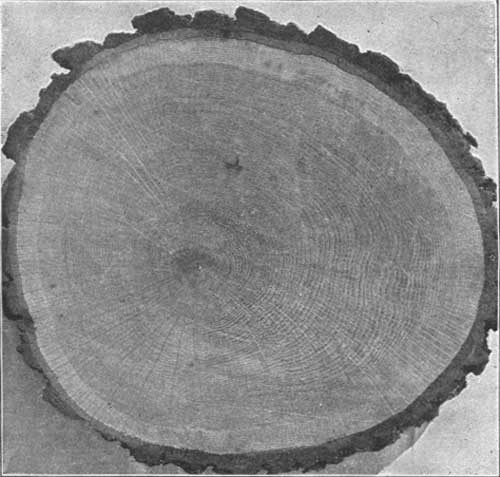
Fig. 17.—Cross section through a Black Oak. Milford, Pa. The
silver grain, the rings of annual growth, and the dark heartwood and
lighter sapwood are visible, and the line between the rough corky outer
bark and mile thinner and lighter-colored inner bark may be seen.
|
THE GROWTH OF A TREE.
|
|
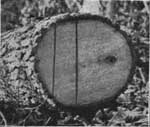
Fig. 18.—Cross section of a fallen Black Oak. Milford, Pa. The
slabs shown in figs. 19 and 22 were sawed lengthwise from this tree,
beginning where the black lines are seen on the cross section.
|
The addition of new material in the way described in the preceding
pages is the foundation of growth. Except in the buds, leaves, fruit,
and the twigs less than a year old, this material is deposited in a thin
coat over the whole tree between the wood and the bark. The new twigs
grow in length by a kind of stretching, but only during the first year.
Thus it is only by means of these youngest twigs that a tree increases
in height and in spread of branches. After the first year their length
is fixed, younger twigs stretch out from the buds, and the older ones
grow henceforth only in thickness. (See fig. 9.) The fresh coat of new
material mentioned above covers them year by year. There are two layers
in this coat, separated by a third one of tender forming tissues called
the cambium, in which the actual making of the new substance goes on.
The inner side of the cambium layer forms new wood, the outer side new
bark. Besides the true cambium, which forms both wood and bark, there is
another cambium which makes the corky outer bark, and nothing else. This
cork cambium may encircle the whole tree, like the true cambium, as in
the Red Cedar, or it may form little separate films in the bark, but in
either case it dies from time to time, and is re-formed nearer the wood.
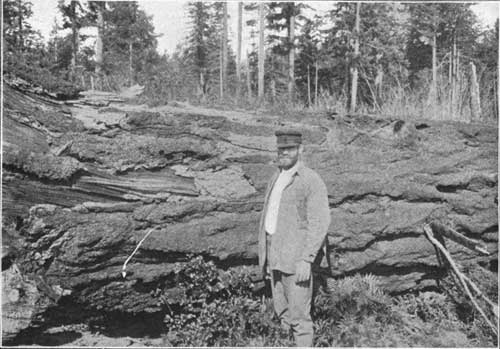
(See figs. 10-13 and Pls. V and VI.)
|
|
Plate VI. BARK OF MATURE RED FIR. OREGON.
|
THE STRUCTURE OF WOOD.
Wood is chiefly made up of very small tubes or cells of various
kinds, which have special uses in the life of the tree. Some conduct
water from the roots to the crown, some store away digested food, and
others merely strengthen the structure of the wood and hold it together.
The wood of cone-bearing or coniferous trees (like the Pines and
Spruces) has but few kinds of cells, while that of the broadleaf trees
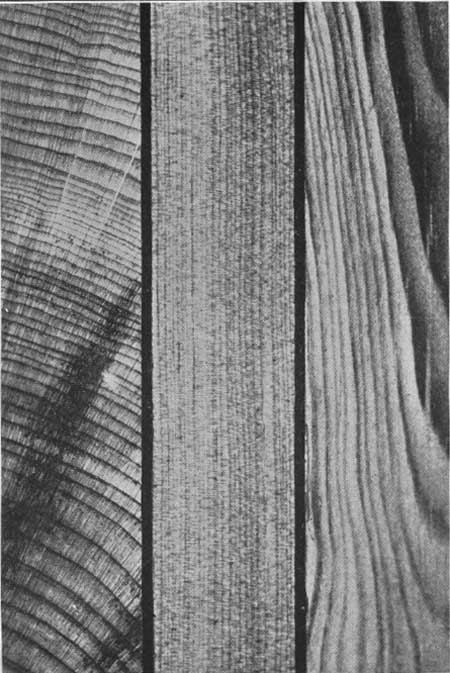
(such as Oaks and Maples) is much less simple. (See figs. 14, 16, 20,
and Pls. VII-IX.) But in each case some of the cells have thick walls
and small openings, an others wide openings and very thin walls. In
climates which have regularly one season of growth and one of rest, like
our own, the cells of the layer of new wood formed each year at the
inner surface of the cambium are arranged in a definite way. When growth
begins in the spring, and the fresh twigs and leaves put out, there is a
great demand for water in the crown to supply these moist green new
parts of the tree. Water rises in most trees through the newer layers of
the wood, and especially through the last ring. Consequently, at first
the tree makes thin-walled cells with wide openings, through which water
can rise rapidly to the ends of the branches. Later on, when the demand
for water is not so great, and there is plenty of digested food to
supply building material, the cells formed are narrow and thick-walled.
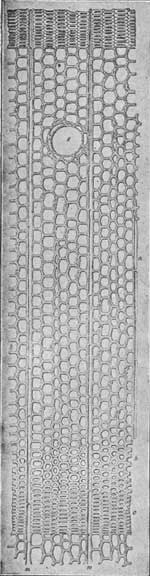
(See fig. 20.) Thus the summer wood in each year's growth is heavier,
stronger, and darker in color than the spring wood. In the wood of many
broadleaf trees, such as Oak and Chestnut, the spring wood is also
marked by a band of open tubes of larger size called ducts. In others,
such as Maple and Beech, these ducts are scattered through the whole
season's growth, and in all conifers, as for example the Pines and
Cedars, they are entirely wanting. But the differences in hardness and
color between the growth of spring and summer are still present. It is
sometimes possible to see the line which separates the growth of two
seasons in the bark, as in the case of common cork, which is the outer
bark of the Cork Oak, a native of southern Europe. (See fig. 15.)
|
|
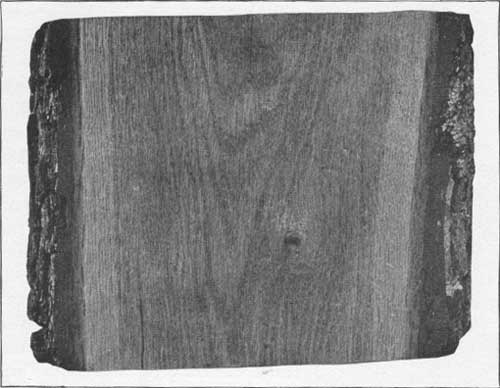
Fig. 19.—Slab sawed lengthwise from a Black Oak. Milford, Pa. The
saw passed about midway between the center of the tree and the bark. The
line between the heartwood and the sap is plainly shown.
|
|
|
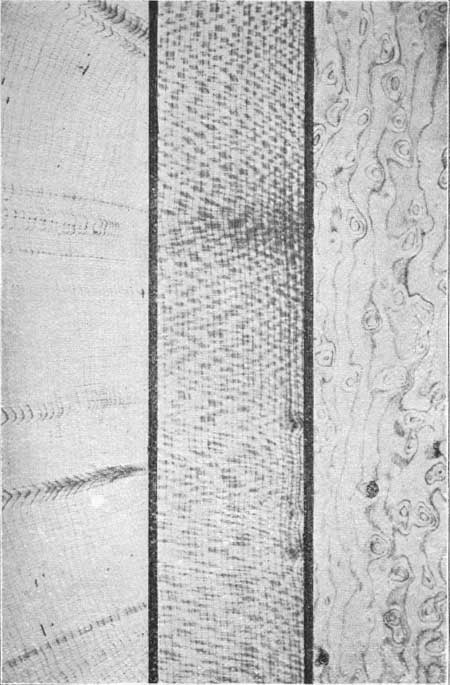
Plate VII. WOOD OF THE WHITE PINE.
|
|
|
|
Fig. 20.—Wood of a Spruce, greatly magnified. (From Hartig,
Anatomie und Physiologie der Pflanzen, Berlin, 1891.)
|
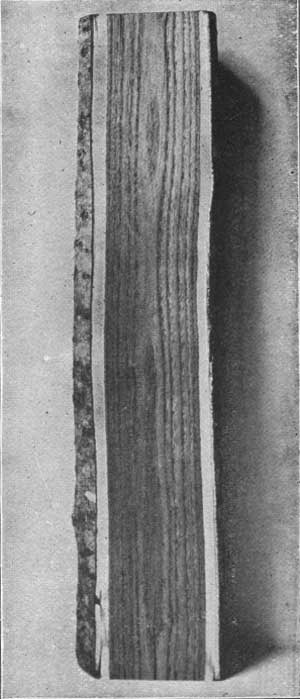
Fig. 21.—A section of the common Staghorn Sumach, allowing the
darkened heartwood, the white sapwood, and the inner and outer bark.
Dark coloring matter is often deposited in the heartwood, as in the case
here shown. Milford, Pa.
|
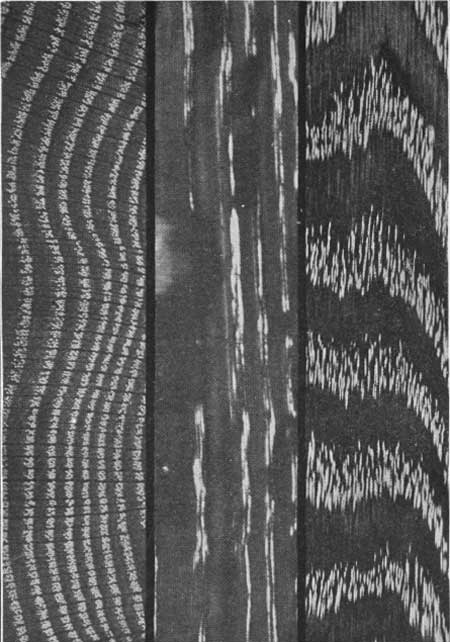
If the trunk or branch of an Oak tree is cut smoothly across, thin
whitish lines may be seen running from within outward. Some of these
lines begin in the center of the tree, and others in each one of the
annual rings. These are the medullary rays, which make the silver grain
in quartered Oak and other woods. (See figs. 17, 19, 22, and Pls.
VII-IX.) They exist in all kinds of trees, but in many, as, for example,
in the Chestnut and in most conifers, they are so fine as hardly to be
seen with the naked eye. Seasoning cracks which run across the rings of
growth always follow the lines of these rays, while others most often
follow along some annual ring.
|
|
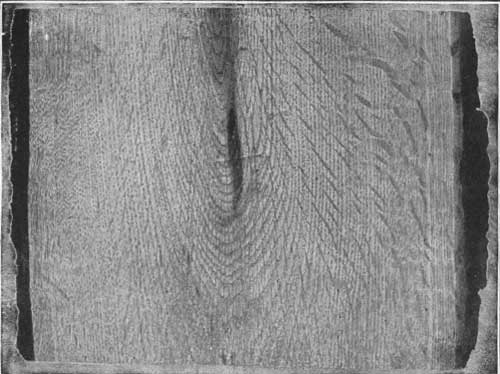
Fig. 22.—Slab sawed lengthwise from a Black Oak. Milford, Pa.
The saw passed almost through the center of the tree, but not quite. The
lines of annual growth are cut through obliquely, and the silver grain
appears quite plainly, both in the middle and at the sides.
|
ANNUAL RINGS.
It is correct to speak of these rings of growth as "annual rings,"
for as long as the tree is growing healthily a ring is formed each year.
(See figs. 17, 22, and Pls. VII-X.) It is true that two false rings may
appear in one year, but they are generally so much thinner than the
rings on each side that it is not hard to detect them. Very often they
do not extend entirely around the tree, as a true ring always does if
the tree is sound. Whenever the growth of the tree is interrupted and
begins again during the same season, such a false ring is formed. This
happens when the foliage is destroyed by caterpillars and grows again in
the same season, or when a very severe drought in early summer stops
growth for a time, after late frosts, and in similar cases.
|
|
Plate VIII. WOOD OF THE RED OAK.
|
|
|
Plate IX. WOOD OF THE SUGAR MAPLE.
|
HEARTWOOD AND SAPWOOD.
An annual layer once formed does not change in size or place during
the healthy life of the tree, except that it is covered in time by other
younger layers. A nail driven into a tree 6 feet from the ground will
still be at the same height after it is buried under 20 or 50 or 100
layers of annual growth. But in most trees, like the Oaks and Pines, the
wood becomes darker in color and harder after it has been in the tree
for some years. The openings of its cells become choked so that the sap
can no longer run through them. From living sapwood, in which growth is
going on, it becomes heartwood, which is dead; because it has nothing to
do with growth. (See figs. 19, 21.) It is simply a strong framework
which helps to support the living parts of the tree. This is why hollow
trees may flourish and bear fruit. Sapwood rots more easily than
heartwood, because it takes up water readily and contains plant food,
which decays very fast. Not all trees have heartwood, and in many the
difference in color between it and the sapwood is very slight. Since
water from the roots rises only in the sapwood, it is easy to kill trees
with heartwood by girdling them, provided all the sapwood is cut
through. But in those which have no heartwood the tubes of the older
layers of wood can still convey water to the crown, and when such trees
are girdled it is often several years before they die.
|
|
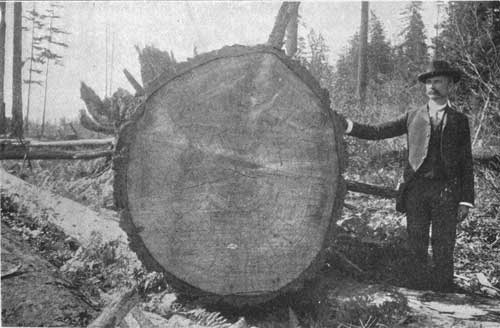
Plate X. CROSS SECTION OF A RED FIR, SHOWING SEASONING CRACKS AND ANNUAL
RINGS. WESTERN OREGON. The rings are much winder near the heart than
near the bark, as usually happens with larger trees. This tree grew
very rapidly.
|
A great many theories have been proposed to account for the rise of
water into the tops of tall trees, some of which, as in the big trees of
California, may be over 300 feet from the ground. But none of these
theories are quite satisfactory, and it must be admitted that we do not
yet know how the trees supply their lofty crowns with the water which
keeps them alive.
primer/chap1-1.htm
Last Updated: 06-Jul-2009 |
|